
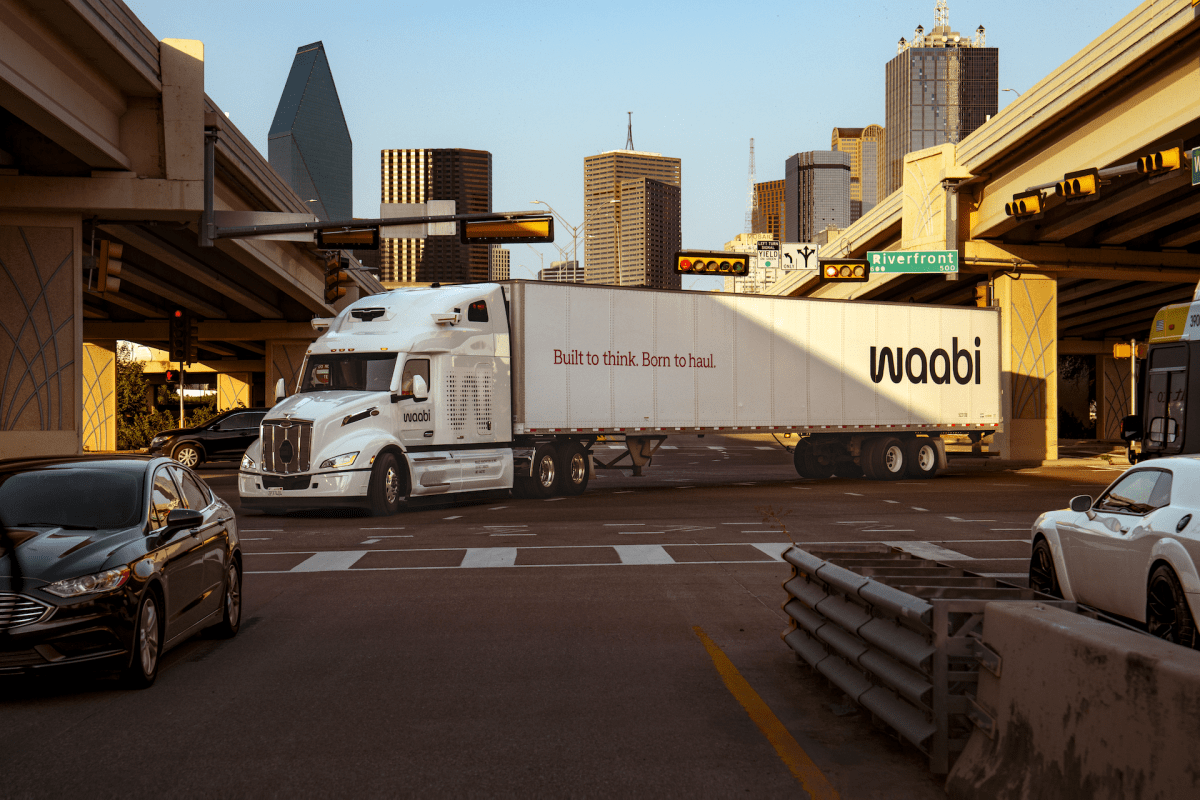
**Waabi Revolutionizes Robotaxi Industry with $1 Billion Funding and Uber Partnership**
I just heard the most epic news in the autonomous vehicle space – Waabi, a self-driving tech startup, just scored a whopping $1 billion in funding and partnered with Uber to bring its self-driving vehicles to the ride-hailing giant’s platform. This is a major milestone for Waabi, which has been making waves in the industry with its innovative approach to autonomous trucking.
I got to chat with Waabi’s founder and CEO, Raquel Urtasun, and she’s convinced that their AI technology is uniquely positioned to succeed where others have struggled. Unlike competitors like Waymo, which has shut down its freight program, Urtasun believes that Waabi’s capital-efficient approach and generalizable AI structure will give it a competitive edge.
So, what’s behind Waabi’s success? Urtasun emphasizes that their core technology allows for a single solution that can do multiple verticals, at scale. Gone are the days of building two separate packages, two separate stacks. Waabi’s incredible core technology enables a single solution that can do multiple verticals.
This partnership is a full-circle moment for Urtasun, who previously served as the chief scientist at Uber’s autonomous vehicle division, Uber ATG. And, this isn’t their first rodeo with Uber – they already have an existing partnership with Uber Freight.
But what’s even more exciting is the launch of Uber’s new division, Uber AV Labs. This will use Uber’s vehicles to collect data for AV partners, which is a significant step forward for the autonomous vehicle industry.
So, what sets Waabi apart? Urtasun says that their approach to self-driving is distinct from their competitors. They use a closed-loop simulator called Waabi World to train and test their AI. This simulator automatically builds digital twins of the world, simulates real-time sensor data, and teaches the Driver to learn from its mistakes without human intervention. This allows Waabi’s Driver to react to its environment like a human would and choose the best maneuver, making it more efficient and effective.
Waabi has spent 4 and a half years bringing its technology to life for freeway and ground street capabilities with vehicles. Urtasun claims the company can build faster and cheaper than competitors. They’ve already launched several business pilots in Texas and plan to launch a fully driverless truck on public highways in the next few quarters.
The partnership between Waabi and Uber is a significant step forward for the autonomous vehicle industry. With Waabi’s capital-efficient approach and generalizable AI structure, the company is poised to tackle the robotaxi market and make a big impact.
As Urtasun said, “We believe in vertically integrating with a fully redundant platform from the OEM. That’s how you really build safe and scalable technology.”
This move is a major game-changer for the autonomous vehicle industry, and I’m excited to see what the future holds for Waabi and Uber.
