
**Automating Incident Management: How a Haystack-Powered Multi-Agent System Saves the Day**
Incident management is a crucial aspect of any organization’s operations. When things go wrong, it’s essential to have a system in place that can detect incidents, investigate their causes, and provide a clear account of what happened. But, let’s be honest, manual incident management is a tedious, time-consuming, and often error-prone process.
That’s where Haystack-powered multi-agent systems come in. These innovative systems use artificial intelligence and machine learning to automate the entire incident management process, from detection to review. In this article, we’ll take a closer look at how these systems work and explore the benefits they offer.
**Meet the Multi-Agent System**
At the heart of a Haystack-powered multi-agent system are three primary agents: the Profiler, the Writer, and the Coordinator. Each agent plays a vital role in the incident management process.
The Profiler agent is responsible for analyzing metrics and logs to identify potential incidents. It uses natural language processing (NLP) and machine learning algorithms to extract insights from unstructured data and synthesize a falsifiable speculation and key facts into a JSON output.
The Writer agent is responsible for drafting a postmortem review of the incident, using the insights provided by the Profiler and other inputs. It generates a production-grade postmortem JSON that includes details on the incident, its impact, and the corrective actions taken.
The Coordinator agent is the central hub of the system, responsible for coordinating the activities of the Profiler and Writer agents. It loads inputs, detects incident windows, and triggers the Profiler and Writer agents to generate their outputs.
**The Process**
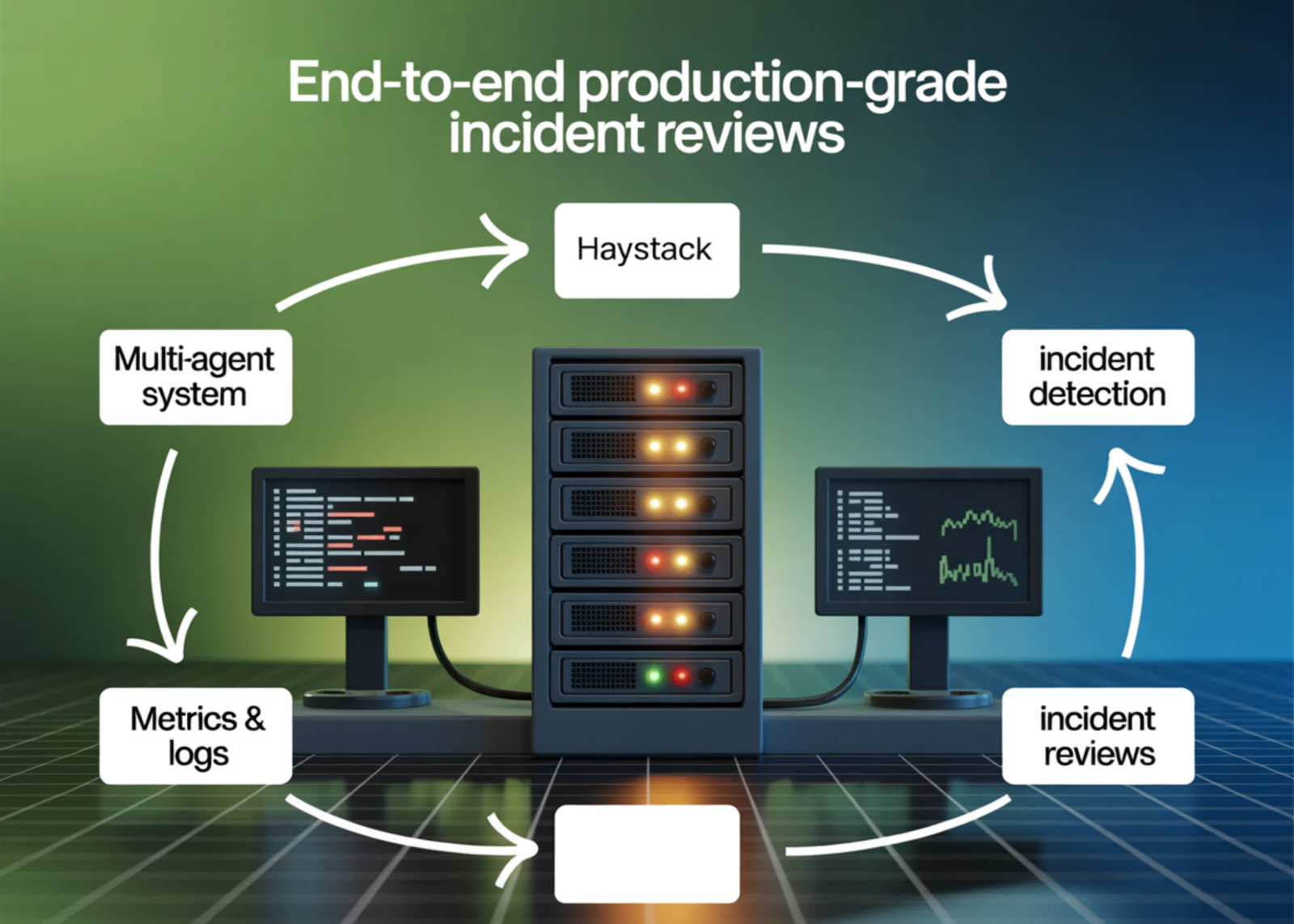
The Haystack-powered multi-agent system follows a straightforward process:
1. **Incident Detection**: The Coordinator agent detects an incident window based on metrics such as p95_ms or error_rate.
2. **Incident Investigation**: The Profiler agent analyzes metrics and logs to identify the root cause of the incident. It generates a falsifiable speculation and key facts into a JSON output.
3. **Mitigation Planning**: The Writer agent drafts a mitigation plan based on the insights provided by the Profiler agent.
4. **Postmortem Review**: The Writer agent generates a production-grade postmortem JSON review of the incident, including details on the incident, its impact, and the corrective actions taken.
**The Code**
The code for the Haystack-powered multi-agent system is written in Python, using the OpenAI ChatGenerator and the `llm` module. The system uses a state schema to manage the flow of data between the agents, ensuring that each agent has the necessary information to perform its tasks.
Here’s an example code snippet from the Profiler agent:
“`python
@device
def sql_investigate(question: str) -> dict:
try:
df = con.execute(question).df()
head = df.head(30)
return {
“rows”: int(len(df)),
“columns”: record(df.columns),
“preview”: head.to_dict(orient=”information”)
}
except Exception as e:
return {“error”: str(e)}
“`
This code snippet demonstrates the Profiler agent’s ability to execute SQL queries and extract insights from the results.
**Conclusion**
In conclusion, the Haystack-powered multi-agent system is a game-changer for incident management. By automating the entire process, from detection to review, these systems enable organizations to respond quickly and effectively to incidents, reducing the time and effort required to resolve them. With its ability to analyze metrics and logs, draft mitigation plans, and generate production-grade postmortem reviews, this system is the perfect solution for organizations looking to streamline their incident management process.
