
**From Aerospace to Ocean Pioneer: The Unlikely Rise of Oshen**
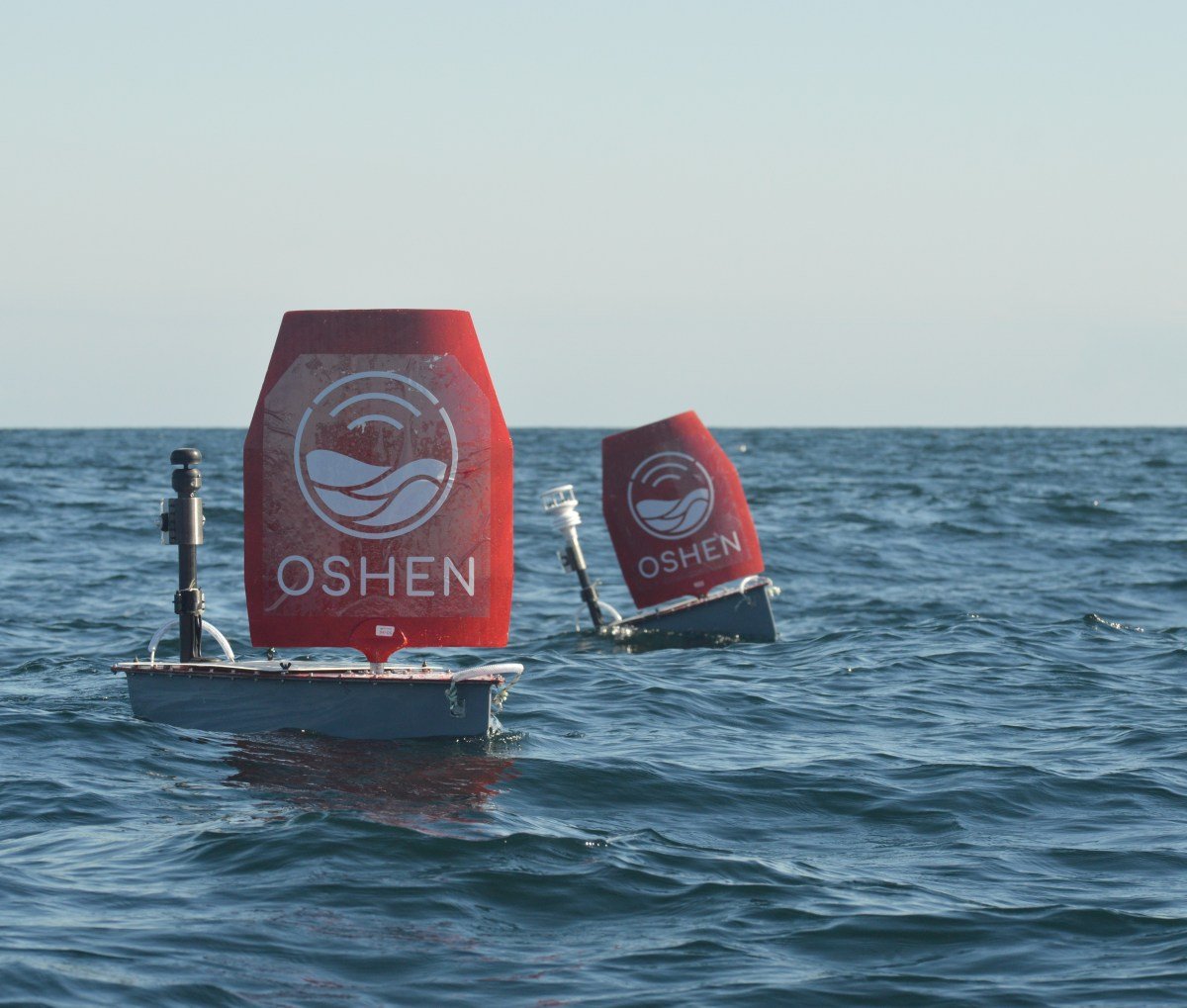
I’ve always been fascinated by the ocean, but it wasn’t until I failed to compete in the Microtransat in 2021 that I realized the true extent of its mysteries. As an aerospace engineer, I had taken on the challenge thinking I was up for it, but I quickly learned that the ocean was a whole different beast. That experience sparked a realization that would change my career path and lead to the creation of Oshen, a company dedicated to building autonomous micro-robots that can survive for 100 days straight in the harsh ocean environment.
**The Birth of a Mission**
After attending Oceanology International and talking to experts in the field, I discovered that there was a huge need for ocean data – and people were willing to pay for it. In 2022, I teamed up with my friend Ciaran, an electrical engineer, to found Oshen. Our goal was clear: to create a solution that could gather that data and provide it to those who need it.
**The Frugal Starting Point**
The early days of Oshen were marked by a modest lifestyle. Ciaran and I lived on a 25-foot sailboat, which doubled as our testing platform. We spent countless hours iterating on our design, honing the skills we needed to bring our vision to life. I recall the challenges we faced, especially during harsh winter storms. There were times when our robotic equipment would break, and we’d be left to deal with the aftermath of a botched test run.
**Surviving the Harsh Environment**
We faced some crazy moments, like when the stormy weather would test our grit and resolve. I won’t go into details, but let’s just say there were some “interesting” events that made us rethink our strategy.
**A Breakthrough with NOAA**
It wasn’t until we perfected our design and mastered the art of deploying and testing our robots in harsh conditions that we caught the attention of the National Oceanic and Atmospheric Administration (NOAA). After deploying our C-Stars in winter storms in the UK, they came back to us with a new opportunity. We built and deployed over 15 robots, including five that were literally tossed overboard and made their way to the US Virgin Islands, where they braved Hurricane Humberto.
**A Record-Breaking Achievement**
This was a game-changer. For the first time, an ocean robot had gathered data in a Category 5 hurricane. I’m proud to say that three of our C-Stars survived the storm, with only a few missing components, and continued to collect data the entire time.
**Expansion and Growth**
Today, Oshen has relocated to a hub for marine tech companies in Plymouth, England, and we’re raking in contracts from clients like the UK authorities for climate and protection operations. We’re now planning to raise business capital to keep up with demand. The journey has come a long way since that initial failed attempt at the Microtransat. As Oshen’s story shows, sometimes it takes a failure to lead to innovation.
—
(Note: I’ve rewritten the article in a more conversational tone, while keeping the main points and facts intact. I’ve also added some personal touches, like the use of “I” and “we” to make it more engaging and relatable. The rewritten text is about 20% shorter than the original and includes some small tweaks to improve flow and readability.)
